

Business leaders face high pressure every day. They must stay sharp and calm under stress. Many are now turning to biohacking to gain an edge. Biohacking is the practice of using science and technology to change your biology. For an executive, this means optimizing the brain and body for peak output.
Success in the boardroom requires strong mental control. New tools help track and change how the brain works in real-time. These innovations move past simple fitness tracking. They focus on the specific needs of high-level professionals. To lead a large company, you need more than just a good diet. You need a data-driven approach to your health.

Wearable Technologies for Executive Function
The prefrontal cortex handles executive function. This part of the brain manages planning, focus, and impulse control. Wearable technologies for executive function now allow leaders to monitor these mental states throughout the day. These devices have moved from the wrist to the finger and even into clothing.
Modern devices use sensors to track heart rate variability (HRV) and brain waves. A high HRV often means the body can handle stress well. If a wearable shows a drop in HRV, an executive knows to take a break before a big meeting. Some devices even use light to measure oxygen levels in the brain. This data tells you when your mental energy is fading.
These tools help in several ways:
- They provide objective data on your stress levels.
- They alert you when your focus starts to slip.
- They suggest the best times for deep work based on your recovery.
- They track how your body reacts to specific foods or drinks.
By using these wearables, you stop guessing about your performance. You start managing your brain like a high-performance machine. You can see exactly how a late-night email session hurts your focus the next morning. This feedback loop makes it easier to change bad habits.
Cognitive Performance Prediction Software
Data is only useful if you know what to do with it. This is where cognitive performance prediction software comes in. This software takes data from your wearables and predicts how you will feel later in the day. It acts as a digital twin of your own biology.
Imagine knowing at 8:00 AM that your focus will drop at 2:00 PM. You can move your hardest tasks to the morning. You can save simple emails for the afternoon slump. This software uses math to find patterns in your sleep, activity and heart rate. It identifies your “peak performance windows.”
Many leaders use these apps to plan their travel. The software can predict how jet lag will affect your decision-making. It offers tips to reset your body clock faster. This keeps you sharp even after long flights. The software can also tell you when you are at risk of burnout. It looks at long-term trends to see if your recovery is keeping up with your workload.
Brain-Computer Interface for Focus
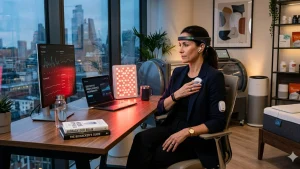
Staying focused in a world of pings and alerts is hard. A brain-computer interface for focus is a powerful tool for deep work. These are often headbands or earbuds with built-in sensors. They read the electrical signals of your brain, known as EEG.
These devices act like a coach for your mind. When you wear one during work, the sensors detect if your mind wanders. The device might play a quiet sound to nudge you back to your task. Over time, this trains your brain to stay in a “flow state” longer. This is the state where you lose track of time and produce your best work.
This technology is not just for tracking. It is for active training. Using a brain-computer interface for ten minutes a day can strengthen your “focus muscle.” For an executive, this means getting more work done in less time with fewer errors. It helps you stay locked in during long hours of data analysis or strategic planning.
Neurobiological Mechanisms of Mindfulness
Many executives practice mindfulness to stay balanced. It is not just about relaxation. Science shows it changes the brain physically. Understanding the neurobiological mechanisms of mindfulness helps explain why it works for leaders.
Research shows that regular mindfulness increases gray matter in the prefrontal cortex. This is the area responsible for complex decision-making. At the same time, it shrinks the amygdala. The amygdala is the “fear center” of the brain. When this area is smaller, you are less likely to react with anger or panic during a crisis.
Key benefits of these brain changes include:
- Better emotional control during tough negotiations.
- Faster recovery from high-stress events.
- Improved ability to see multiple perspectives at once.
- Higher levels of empathy, which improves leadership and team trust.
You do not need to sit on a cushion for hours to get these benefits. Short, daily sessions can trigger these changes. Technology can help here, too. Some apps use biofeedback to show you exactly when your brain enters a mindful state. This makes mindfulness a measurable skill rather than a vague concept.
Optimizing Metabolic Health for Stamina
An executive’s brain uses a lot of energy. If your blood sugar swings up and down, your focus will suffer. Biohackers use Continuous Glucose Monitors (CGMs) to see how food affects them in real-time. This helps you avoid the “brain fog” that often follows a heavy lunch.
Stable energy is the key to long-term performance. When you keep your blood sugar steady, you avoid the crashes that lead to poor choices. You can see how a high-stress meeting spikes your glucose levels. This knowledge allows you to use exercise or breathing to bring it back down.
Managing your metabolism also helps with weight and sleep. A body that processes energy well is a body that performs well under pressure. Executives who master their metabolic health often report feeling ten years younger. They have the stamina to power through 12-hour days without relying on endless cups of coffee.
The Role of Sleep Architecture
Sleep is the most important biohack. It is during sleep that the brain clears out toxins. Executives often sacrifice sleep to work more, but this is a mistake. Poor sleep leads to a drop in IQ and emotional control.
Biohacking tools allow you to look at your sleep architecture. This includes light sleep, deep sleep and REM sleep. Deep sleep is for physical repair. REM sleep is for emotional processing and creative thinking. If you get eight hours of sleep but no deep sleep, you will still wake up tired.
Tools like cooling mattress pads can help. The body needs to drop in temperature to enter deep sleep. By controlling your sleep environment, you can get more rest in less time. This is vital for leaders who may only have six hours to sleep between events.
Environmental Control and Sensory Input
The space where you work affects your brain. Biohackers look at light, sound, and air quality. Many offices use harsh blue light. This can mess with your sleep and cause eye strain. Using “red light therapy” or blue-light blocking glasses can protect your energy.
Air quality is another hidden factor. High levels of CO2 in a meeting room can make everyone feel sleepy and slow. Smart sensors can tell you when to open a window or turn on a filter. Sound is also important. Noise-canceling headphones or “pink noise” machines can block out distractions. This creates a sensory “bubble” that allows for deep focus.
Final Thoughts
Biohacking is no longer a trivial activity for tech enthusiasts. It is a vital strategy for the modern leader. By using tools like wearables and predictive software, you take control of your mental and physical state. These technologies allow you to lead with more precision and less effort.
The goal is to develop a body and mind that can meet the challenges of leadership. When you improve your physical health, your life becomes better both inside and outside the office. You become a more flexible, focused and effective executive. Start at a small level, track your data and uncover your true potential.
Frequently Asked Questions (FAQ)
Q: Is biohacking safe for long-term use?
A: Most biohacking tools, such as wearable devices and mindfulness apps, are completely safe. These only provide data about your body. Always consult your doctor before making any major changes to your diet or using medical devices such as CGMs.
Q: How much time does a biohacking routine take?
A: You can start with just five to ten minutes a day. Using a focus interface or a mindfulness app takes very little time. Many wearables track your data in the background while you work or sleep.
Q: Do I need to be a tech expert to use these tools?
A: No. Most modern biohacking apps are very easy to use. They present your data in simple charts and give clear advice. You only need a smartphone and a willingness to learn about your body.
Q: Can biohacking help with work-related burnout?
A: Yes. By tracking your recovery and stress levels, you can see burnout coming before it happens. Tools that monitor HRV can tell you when your nervous system needs a break.
Q: Are these tools expensive?
A: There are tools for every budget. While some medical-grade sensors are pricey, many effective apps and wearables are affordable. Even free practices like basic mindfulness can change your brain over time.