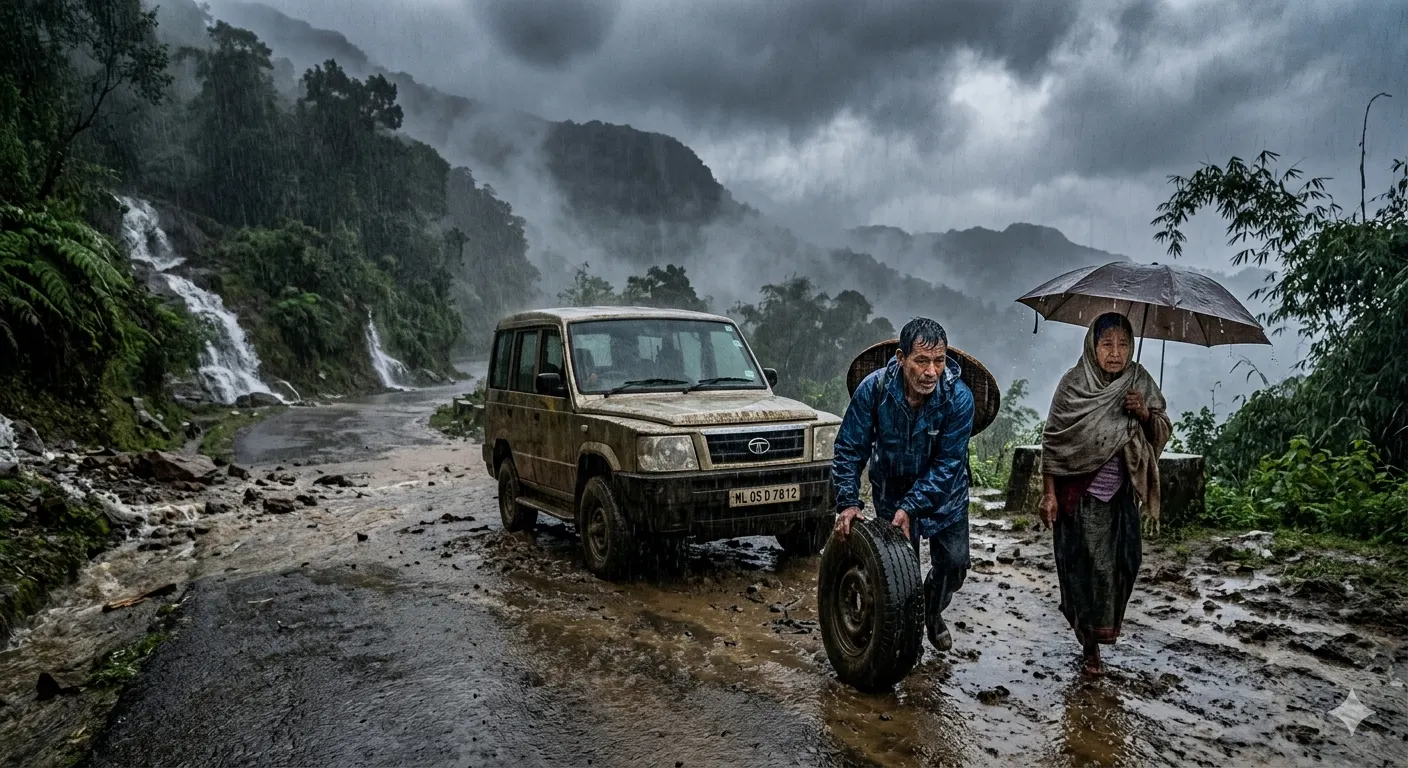
Meghalaya is a state in north-eastern India. It is famous for lush green mountains, clean rivers and bridges made of living roots. Tourists like to see the clouds and huge waterfalls here. However, your trip can easily go wrong if you time it poorly.
Planning a trip here requires careful attention to the weather. The wrong season will leave you stuck inside your hotel room. You will miss the views and face major safety hazards.
This blog post explains the worst time to visit Meghalaya so you can plan a safe trip. We will look at weather patterns, safety issues and closed attractions.
The Ultimate Monsoon: Meghalaya Off-Season Months
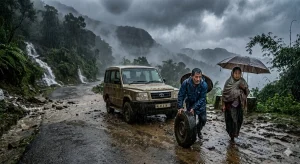
The Meghalaya off season months run from late May to September. During this time, southwest monsoon brings huge rain to the region.
Meghalaya is one of the wettest places on Earth. Towns like Cherrapunji and Mawsynram break global rainfall records every year. The Cherrapunji rainy season months start in May and last through September. During these months, the rain is relentless. It does not just drizzle for an hour. It pours heavily for days without stopping.
The heavy rain creates many problems for tourists.
- Zero Visibility: The roads and hills were covered with thick fog. You will not see famous sightseeing spots or valleys.
- Closed Attractions: Many trekking routes and parks are closed for security reasons.
- Outdoor Limits: It’s not easy to walk on wet forest paths.
If you want a relaxing holiday, avoid these months. The wet season changes the entire travel experience.
When to Avoid Meghalaya Tour: The Safety Risks
Safety should be your main priority when you travel. There are several reasons when to avoid Meghalaya tour planning during the high wet season.
Landslides and Roadblocks
The hills of Meghalaya are steep. Heavy rains loosen the soil quickly. This causes sudden landslides on main highways. National Highway 6, which connects Shillong to other areas, often closes due to debris. You could get stuck in traffic for ten hours. In worst cases, you might get stranded in a remote village with no help.
Dangerous Waterfalls and Rivers
In winter, the water in Meghalaya is crystal clear. In the monsoon, the rivers swell and turn muddy brown. The famous transparent Dawki River loses its beauty. It becomes a fast, dangerous torrent of mud. Boating stops completely.
Waterfalls like Nohkalikai and Seven Sisters look powerful, but you cannot get close to them. The spray is too strong, and the surrounding rocks are slippery.
Slippery Living Root Bridges
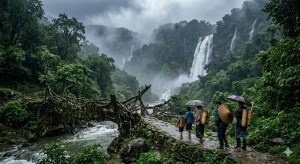
Visiting the double-decker living root bridge in Nongriat is a popular activity. The trek requires walking down 3,000 stone steps. During the rainy season, these steps become very slippery. Moss grows on the stone and wood. One slip can cause a serious injury. Flash floods can also trap you in the valley.
Shillong Weather in July: What to Expect
July is the peak of the monsoon season. If you check the Shillong weather in July, you will see high humidity and constant rain.
Temperature and Rainfall in July
- Average Temperature: 68 degree to 75 degree F (20-24 degree C)
- Rainy Days: 25 to 28 days in the month
- Average Rainfall: Over 30 inches in just one month
Shillong is the capital city. It sits at a high altitude. In July, the city is constantly damp. Your clothes will not dry. The streets face water logging, which creates traffic jams.
The cold wind combined with wet clothes makes people sick easily. You will spend more time drinking tea in your room than exploring the pine forests. Sightseeing spots like Laitlum Canyons are completely whiteout zones in July. You will stand at the edge of the canyon and see nothing but thick white fog.
Month-by-Month Breakdown of the Wet Season
To help you plan, here is a detailed look at the worst months to visit.
| Month | Rain Intensity | Travel Difficulty | Key Issues |
| May | Moderate to High | Medium | Sudden storms, occasional landslides |
| June | Extremely High | High | Heavy flooding, highway closures |
| July | Extremely High | Very High | Thick fog, no views, closed river activities |
| August | Extremely High | Very High | Landslides, high humidity, leech activity |
| September | High | Medium | Wet trails, humid weather, rain showers |
June and July are the absolute worst months. The infrastructure struggles to handle the water volume. Power outages are common in rural home stays during these months.
The Hidden Annoyance: Leeches and Bugs
The tropical forests of Meghalaya are full of life. In the wet season, this life includes pests.
Leeches are everywhere on the forest floors. If you walk near grass or trees, they will stick to your shoes and skin. They do not cause serious disease, but their bites bleed a lot.
Mosquitoes also breed in the standing water. This increases the risk of malaria and dengue in lower areas.
Who Should Actually Visit During the Monsoon?
The monsoon is not bad for everyone. A specific type of traveler might enjoy this wet season.
If you are a photographer who loves dramatic clouds, you might like it. The green colors of the hills are very bright. The waterfalls are at their maximum size.
Budget travelers might also find cheap hotel rates. Flight prices to Guwahati drop during this time.
However, you must accept the risks. You must be okay with staying indoors. You must carry high-quality rain gear and waterproof boots.
The Best Months to Visit Meghalaya
If you want to avoid the bad weather, plan your trip during the dry months. The best time to visit is from October to April.
Post-Monsoon (October to November)
This is the perfect time for most travelers. The rains stop, but the hills stay green. Waterfalls still have plenty of water. The rivers start to clear up. The weather is cool and pleasant.
Winter (December to February)
This is the dry season. The temperature drops, especially in Shillong. It can get cold at night.
The water in Dawki and Shnongpdeng is perfectly clear during these months. You can see the river bed from your boat. It looks like the boat is floating in the air. All trekking paths are dry and safe.
Spring (March to April)
The weather is warm but pleasant. You can see beautiful flowers blooming across the valleys. It is a great time for adventure sports like caving and rock climbing.
Quick Checklist for Monsoon Travel
If you must travel to Meghalaya during the rainy months, follow these safety tips:
- Pack Waterproof Gear: Carry a strong umbrella and a high-quality raincoat.
- Use Dry Bags: Keep your phones, passports, and cameras in ziplock dry bags.
- Hire a Local Driver: Local drivers have good knowledge of the roads. They know how to drive safely in dense fog and heavy rain.
- Buy Travel Insurance: Make sure your insurance covers trip cancellations and medical emergencies.
- Check Road Conditions Daily: Ask your hotel staff about active landslides before you start driving.
- Carry Insect Repellent: Use a spray to protect against leeches and mosquitoes.
Conclusion
Meghalaya is a beautiful place, but nature is very powerful here. The worst time to visit Meghalaya is during the heavy monsoon from May to September.
If you want clear views, exciting outdoor adventures and safe roads, avoid travelling during these months. Instead, book your trip between October and April. You will get a chance to experience the famous blue waters, dry paths and enchanting scenery of this state.
Frequently Asked Questions (FAQs)
Q: What is the worst time to visit Meghalaya?
A: The worst time occurs from May to September. These are the most rainfall months with heavy rains, dense fog and landslides.
Q: Can we visit Shillong in July?
A: Yes, but it is not ideal. Shillong weather in July is very wet. You will face heavy rain and blocked views.
Q: When does the rainy season start in Cherrapunji?
A: The cherrapunji rainy season months start in May. They last until September. It rains almost every day during this time.
Q: Which months are the off-season in Meghalaya?
A: The Meghalaya off season months run from late May to September. Hotels offer big discounts, but safety risks are high.
Q: Is it safe to travel to Meghalaya during the monsoon?
A: Road trips can be dangerous. Heavy rains cause sudden landslides on major roads. Thick fog makes driving very hard.
Q: When is the best time to see the clear water in Dawki?
A: The best time is from October to February. The rivers are calm and clear during these dry winter months.