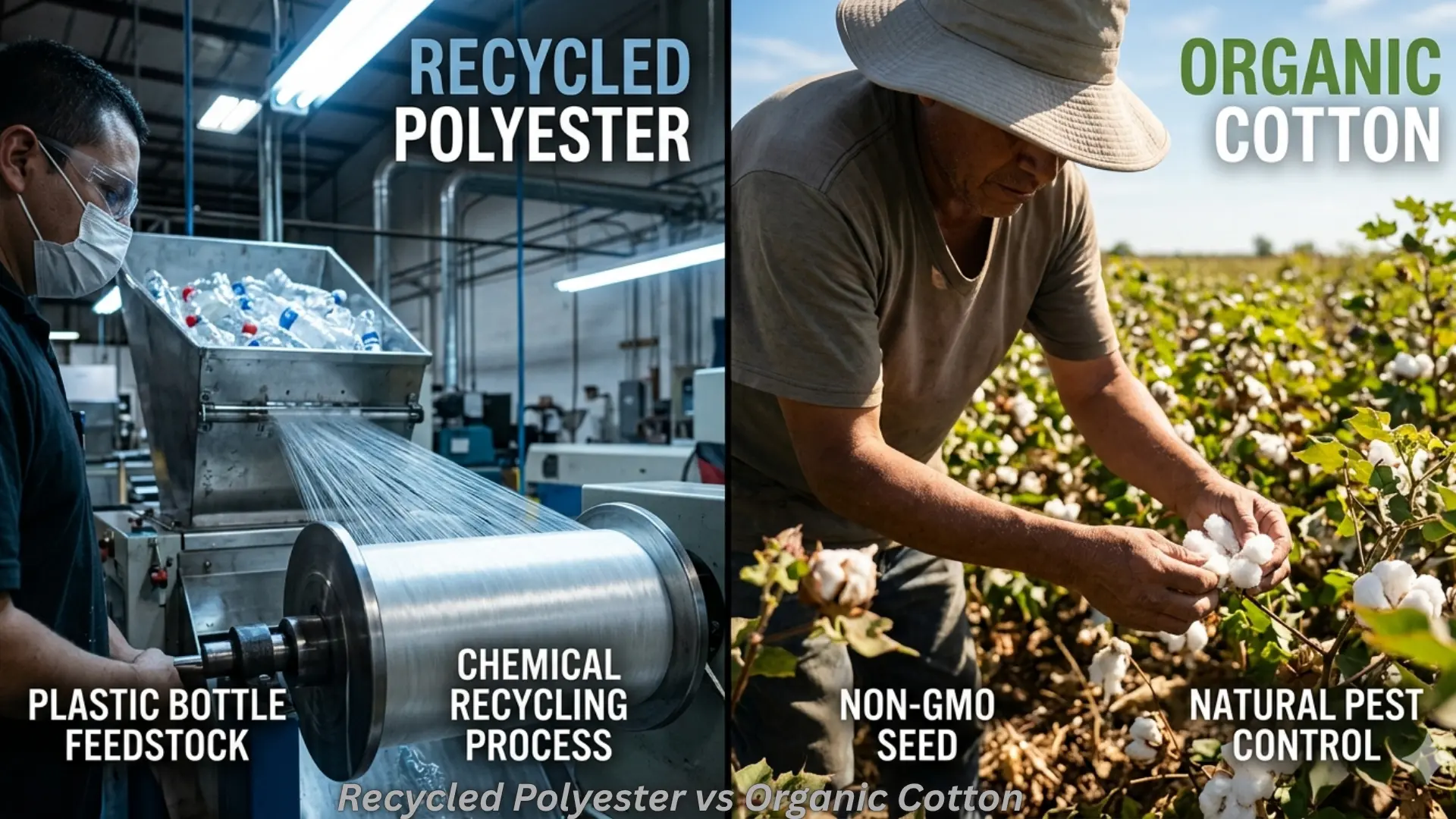
Shopping for eco-friendly clothes can feel like a puzzle. You see tags for “recycled” materials and “organic” fibers. Brands claim both are great for the planet. But which one should you actually buy?
When we compare recycled polyester vs organic cotton, there is no one clear winner. Both materials have their own advantages and disadvantages. Choosing the right material depends on how you plan to use that item. This post will help you make a purchase with confidence by explaining all the facts in detail.
What is Recycled Polyester (rPET)?
Recycled polyester, or rPET, comes from plastic waste. Manufacturers take old water bottles and food containers. They clean them and shred them into tiny flakes. These flakes melt down into new yarn. This process keeps trash out of the landfill.
Using rPET fabric vs GOTS cotton offers a different set of benefits. Recycled polyester stops plastic from entering our oceans. It also uses much less energy to make than new (virgin) polyester. It is a tough, stretchy material. This makes it perfect for gym gear and raincoats. Because it reuses existing plastic, it helps lower the need for new oil drilling.
The production of rPET is a clever loop. It takes something we already have plastic waste and turns it into something useful. This reduces the carbon footprint of the garment by about 30% compared to virgin polyester. However, we must remember that it is still a synthetic fiber. It lacks the natural feel of plant-based materials.
What is Organic Cotton?
Organic cotton grows without harsh chemicals. Farmers use natural methods to keep bugs away. They do not use synthetic fertilizers or toxic sprays. Most high-quality organic items carry the GOTS (Global Organic Textile Standard) label.
The rPET fabric vs GOTS cotton debate often focuses on skin health. Cotton is soft and lets your skin breathe. It is ideal for t-shirts, sheets, and baby clothes. Unlike polyester, it does not come from fossil fuels. It supports biodiversity by keeping the soil healthy for insects and birds.
Farmers who grow organic cotton use crop rotation. This keeps the soil full of nutrients. It also prevents the soil from washing away during heavy rain. This method protects the local water supply from chemical runoff. While it takes more labor to farm this way, the results are better for the people working the land.
The Life Cycle Assessment of Eco Fabrics
To understand the real impact, we look at a life cycle assessment of eco fabrics. This process tracks a product from the farm or factory to the trash bin. It measures carbon emissions, water use and waste.
Recycled polyester starts as a solution to waste. It gives a second life to plastic that already exists. However, it still requires heat and chemicals to process. Organic cotton starts in the soil. It needs a lot of water to grow, even if it is organic. But cotton improves soil health over time.
A life cycle assessment of eco fabrics shows that both fibers save resources compared to standard versions. Standard cotton uses massive amounts of pesticides. Standard polyester relies on the oil industry. Neither eco-option is perfect, but both are better than “fast fashion” defaults.
When we dig deeper into the life cycle assessment of eco fabrics, we see differences in energy use. Recycled polyester usually wins on energy savings. It takes less power to melt plastic than to grow and harvest cotton. Yet, cotton wins on chemical safety. It does not release heavy metals during the dyeing process if it is GOTS certified.
Microplastic Shedding in Synthetics
One big worry with recycled polyester is invisible. It is the issue of microplastic shedding in synthetics.
Polyester is a type of plastic. Every time you wash a synthetic shirt, tiny bits of plastic break off. These fibers are too small for water filters to catch. They end up in our rivers and oceans. Fish eat these particles, and they move up the food chain.
When comparing recycled polyester vs organic cotton, this is a major drawback for the synthetic side. Organic cotton does not have this problem. Even if cotton fibers wash away, they are natural. They do not pollute the water with plastic.
If you buy recycled polyester, consider using a special laundry bag. These bags catch the tiny fibers before they drain away. This reduces the microplastic shedding in synthetics significantly. Using cold water and short wash cycles also helps. The fewer times the fabric rubs against itself, the fewer fibers it loses.
Biodegradability of Textile Fibers
What happens when you finally throw your clothes away? This is where the biodegradability of textile fibers matters most. We want clothes that don’t sit in landfills forever.
Organic cotton is a plant. Under the right conditions, it will break down in a few months. It returns to the earth without leaving toxins behind. This makes it a circular material. If you put a 100% organic cotton shirt in a compost pile, it will disappear.
Recycled polyester will stay in a landfill for hundreds of years. It may be recycled, but it is not biodegradable. It will eventually break into smaller pieces of plastic. If your goal is a “zero waste” life, the biodegradability of textile fibers makes natural options like cotton the better path. Plastic, even when recycled, stays on the planet for a very long time.
We must also consider blended fabrics. A shirt made of both cotton and polyester is very hard to recycle. It is also not biodegradable. For the best end-of-life results, stick to 100% of one fiber.
Durability and Function
Sustainability is also about how long a garment lasts. A shirt that lasts ten years is better than one that lasts two.
Recycled polyester is very strong. It does not wrinkle or shrink easily. It wicks sweat away from your body. This makes it the best choice for hiking and sports. If a garment lasts longer, its overall environmental cost goes down. It holds its color well and dries very fast.
Organic cotton is comfortable but can wear out faster. It can shrink in a hot dryer. It absorbs moisture, so it stays wet if you sweat a lot. For daily wear at the office or home, cotton is often the favorite for its soft feel. In the rPET fabric vs GOTS cotton comparison, rPET wins on toughness and longevity.
Impact on Water and Soil
Growing cotton takes a lot of water. Some say it takes 2,700 liters of water to make one t-shirt. Organic farming helps by using rain more effectively. It also keeps the soil clean for future crops. This protection of the earth is a key part of the life cycle assessment of eco fabrics.
Recycled polyester uses very little water. It does not need a farm to grow. However, the factories that melt the plastic can produce air pollution. You must weigh the water use of cotton against the industrial impact of polyester. Each has a different footprint on the natural world.
Organic cotton farmers often use “grey water.” This is recycled water from other uses. This helps lower the overall water footprint. Also, because they don’t use chemicals, the water that leaves the farm is clean. Standard cotton farming often poisons local wells. Organic methods stop this cycle of pollution.
The Problem with “Greenwashing”
Many brands use the word “sustainable” as a marketing tool. They might use a tiny amount of recycled polyester and claim the whole shirt is green. Always look for certifications.
For cotton, GOTS is the gold standard. It covers the farm and the factory. It ensures fair pay for workers too. For recycled polyester, look for the Global Recycled Standard (GRS). This proves the plastic actually came from waste and not from a new source.
How to Choose the Best Fiber
So, which one to choose between recycled polyester and organic cotton? Follow these simple rules when shopping for the next time:
- For Activewear: Choose recycled polyester. It performs better during exercise. It stays light when wet and lasts a long time. It is great for leggings and sports bras.
- For Basics: Choose organic cotton for t-shirts and underwear. It is better for your skin. The biodegradability of textile fibers is a big plus for items you replace more often.
- For Outerwear: Recycled polyester is great for jackets. It blocks wind and sheds water. It provides warmth without much weight.
- For Longevity: Look for high-quality items. Avoid thin fabrics that tear easily. A heavy-weight organic cotton hoodie can last many years.
- For Sleepwear: Organic cotton is the winner here. It regulates your temperature and feels soft against the skin all night.
The Social Impact
We should also think about the people who make our clothes. Organic cotton farming is safer for workers. They do not breathe in toxic sprays. They do not handle poisonous chemicals all day.
Recycled polyester factories are often high-tech. They require fewer workers but need high safety standards to manage heat and melting plastic. When you choose rPET fabric vs GOTS cotton, you are also choosing which industry to support. Both can be ethical if the brand is transparent about its factories.
The Future of Eco-Friendly Fashion
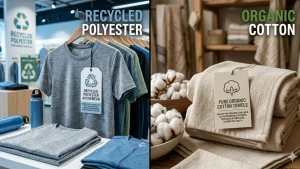
The fashion world is changing fast. We are seeing new ways to recycle cotton and new ways to make plastic-free synthetics. For now, picking rPET or GOTS cotton is a great step. Both choices show you care about the planet.
Avoid buying “virgin” polyester or standard cotton. Standard cotton uses 16% of the world’s insecticides. Virgin polyester uses new oil. By sticking to recycled or organic options, you reduce your carbon footprint. You also help push brands to use better materials.
We are also seeing the rise of “bio-polyester.” This is plastic made from plants like corn or sugar. It might solve the oil problem, but it still has issues with microplastic shedding in synthetics. The industry is still looking for a perfect fiber.
Summary of rPET fabric vs GOTS cotton
When we compare rPET fabric vs GOTS cotton, we see two different paths to sustainability. One focuses on cleaning up plastic waste. The other focuses on clean farming and healthy soil.
- rPET is best for durability and high-intensity use. It reuses waste and saves energy.
- GOTS Cotton is best for skin comfort and natural disposal. It protects soil and water.
Always consider the microplastic shedding in synthetics when washing rPET. Always check the biodegradability of textile fibers if you want a garment that disappears at the end of its life.
Final Thoughts
The battle of recycled polyester vs organic cotton does not have one winner. We need recycled polyester to manage our plastic waste. We need organic cotton to protect our soil and water.
Check your labels before you buy. Look for the GOTS logo for cotton. Look for “post-consumer recycled” for polyester. Small choices in the fitting room lead to big changes for the earth. Buy less, choose well, and make it last. Understanding the life cycle assessment of eco fabrics helps you become a smarter, kinder consumer. Every purchase is a vote for the kind of world you want to live in.
Frequently Asked Questions (FAQ)
Q: Can recycled polyester be recycled again?
A: Most recycled polyester is made from plastic bottles, not old clothes. It is hard to recycle a polyester shirt into a new shirt multiple times. The quality of the plastic drops each time it is melted. Due to mechanical recycling, the fibers eventually become so weak that it becomes impossible to use them.
Q: Is GOTS cotton better for sensitive skin than rPET?
A: Yes, organic cotton is usually better for sensitive skin. It does not contain the harsh chemicals found in standard cotton. It is also more breathable than recycled polyester. Synthetics can trap sweat and heat, which may irritate the skin.
Q: How do I stop microplastic shedding in synthetics?
A: You can use a GuppyFriend washing bag or put a filter in your washing machine. Washing clothes in cold water and using liquid soap is also beneficial. Avoid washing synthetic fabrics frequently. Instead, let them air out in between wear.
Q: Which fiber has a better life cycle assessment of eco fabrics?
A: Organic cotton usually wins for its end-of-life impact because it is biodegradable. Recycled polyester often wins for its lower energy and water use during production. A true assessment depends on how long you keep the garment.
Q: Does rPET contain BPA?
A: Most recycled polyester is obtained from PET bottles, which are BPA-free. However, some recycled plastics may contain small amounts of other chemicals.