

Do you feel like your hair has stopped growing? Many people struggle with dry, brittle hair that breaks before it gets long.
You do not need expensive salon visits to get the hair of your dreams. Instead, you can build a simple routine at home. True hair health starts at the roots. You must care for your scalp just like you care for your face.
This guide will show you how to transform your hair. We will look at three key steps: scalp care, organic oils and smart styling. We will also share a simple plan to fix chemical damage.
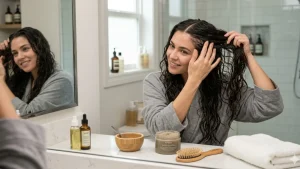
The Foundation: Scalp Exfoliation Routine for Healthy Hair
Many people wash their hair often but neglect their scalp. Over time, hair products, sweat and dead skin build up on your head. This buildup blocks your hair follicles. Blocked follicles lead to slow growth and weak hair strands.
You need a regular scalp exfoliation routine for healthy hair to clear away this buildup.
Think of exfoliation as a fresh start for your head. It boosts blood flow to your roots. Better blood flow gives your hair more oxygen and nutrients. This procedure helps to make your hair faster and stronger.
How to Identify Scalp Buildup
If your scalp feels itchy, scaly or oily immediately after washing your hair, it is possible that something has accumulated there. Sometimes, buildup looks like white powder when you scratch your head. This barrier stops your hair treatments from working. Regular washing with normal shampoo is not always enough to remove it.
How to Exfoliate Your Scalp Safely
You can choose between a physical scrub and a chemical exfoliator. Both ways are effective for using correctly.
Option 1: DIY Physical Scrub
You can make a gentle scrub in your kitchen itself.
- Mix two tablespoons of brown sugar with two tablespoons of your favorite shampoo.
- Wet your hair in the shower.
- Apply this mixture on your scalp using your fingertips.
- Massage in gentle, circular motions. Do not use nails (finger), as they can scratch your skin.
- Rinse your hair with lukewarm water thoroughly.
Option 2: Oatmeal and Aloe Vera Scrub
It is a soft option for dry and itchy scalp.
- Mix two tablespoons of oatmeal with two tablespoons of aloe vera gel.
- Add a few drops of water to make a smooth paste.
- Apply this mixture on your scalp and massage gently.
- Oatmeal removes dead skin while aloe vera soothes irritation.
Option 3: Chemical Exfoliators
Chemical exfoliators use mild acids such as salicylic acid. These acids dissolve dead skin and oil without rubbing.
- Apply this treatment directly to your dry or damp scalp before washing your hair.
- Leave it on for ten minutes.
- Wash your hair with a gentle shampoo.
Your Weekly Scalp Routine
Do not exfoliate every day. Over-cleansing will dry out your skin.
- Normal to Dry Scalp: Exfoliate once every two weeks.
- Oily Scalp: Exfoliate once a week.
- Sensitive Scalp: Exfoliate once a month with a very gentle formula.
Nourish Your Roots with the Best Organic Hair Growth Oils
After you clear the buildup, your scalp can absorb nutrients much better. This is the perfect time to apply the best organic hair growth oils to your roots.
Organic oils do not contain harmful chemicals or artificial colors. They nourish your scalp with natural vitamins, fatty acids and antioxidants.
Understanding Essential Oils and Carrier Oils
You should know the difference between carrier oils and essential oils. Carrier oils are thick and can be applied directly to your skin. Essential oils are very strong and can burn your skin if used alone. You must always mix a few drops of essential oil into carrier oil.
Top Organic Oils for Hair Growth
Different oils solve different hair problems. Here are the top organic oils you should try:
- Rosemary Oil: This oil is famous for boosting hair growth. It improves blood flow to your scalp. It works as well as some chemical growth treatments. Always dilute it with carrier oil like jojoba oil.
- Castor Oil: This thick oil is rich in ricinoleic acid. It fights inflammation and retains moisture. Castor oil is great for making thin hair look dense.
- Jojoba Oil: Jojoba oil is very similar to the natural oils of your scalp. It provides moisture to your scalp without clogging the hair follicles.
- Argan Oil: This oil is rich in Vitamin E. It protects the hair from heat and environmental damage by covering the hair roots.
- Pumpkin Seed Oil: This oil helps to stop a hormone associated with hair loss. This is an excellent option for thin hair.
How to Apply Growth Oils
To get the best results, use a warm oil massage.
- Warm a small amount of oil in a bowl. Make sure it is comfortable to the touch.
- Part your hair into small sections.
- Apply some drops of the oil directly on your head’s skin (scalp).
- Massage your scalp for five minutes. Massage firmly, in a circular motion.
- Let the oil be in the hair for at least thirty minutes.
- Wash your hair with a mild shampoo to remove the oil.
Do this treatment twice a week. You will notice softer scalp skin and shinier hair within a month.
Shield Your Strands: Protective Hairstyles for Natural Hair Growth
Growing healthy hair is only half the battle. You must also keep that hair from breaking.
Daily brushing, wind, and rubbing against clothes damage your hair ends. The best way to stop this damage is by wearing protective hairstyles for natural hair growth.
A protective style tucks your hair ends away safely. This limits how much you touch, pull, and style your hair. Less handling means less breakage. Your hair can grow longer because you are keeping the length.
Preparing Your Hair for Protective Styling
You must prepare your hair before installing any protective style. Cleanse your hair with a clarifying shampoo first. Follow with a deep conditioning treatment to lock in moisture. Ensure your hair is completely dry before braiding or twisting. Installing styles on wet hair can cause mold or mildew to grow.
Safe Protective Styles to Try
Choose styles that do not pull too tightly on your scalp. Tight styles can cause hair loss.
- Box Braids: These braids keep your hair safe for weeks. Make sure the braids at your hairline are loose.
- Flat Twists: This style lies flat against your head. It is gentle on your scalp and easy to do at home.
- Low Buns: A loose low bun keeps your ends off your shoulders. Use a silk scrunchie instead of a rubber band.
- Two-Strand Twists: This is a simple, low-tension style. You can wear them as they are or unravel them for a wavy look.
How to Care for Your Hair While It Is Protected
Do not install a protective style and forget about it. You still need to maintain your hair health.
- Keep Your Scalp Clean: Use a cotton pad with witch hazel to clean your scalp between hair washes.
- Hydrate Daily: Spray water or leave-in conditioner on your hair every morning.
- Protect Your Hair at Night: Wear a satin cap or use a silk pillow cover. Rough cotton sheets draw moisture out of your hair.
- Limit Wear Time: Do not keep a protective style in for more than six to eight weeks. Your hair needs a break to breathe.
How to Safely Remove Protective Styles
Do not rush when opening your braids or tangled hair. Spray water and oil on the hair to make it smooth. Before combing, gently detangle the hair with your fingers. This prevents you from ripping through knots and causing breakage.
Bonus: How to Repair Bleached Hair at Home
Bleaching strips your hair of its natural moisture and breaks its internal bonds. This damage makes your hair dry, gummy, and prone to snapping.
Do not panic if your hair is damaged from bleach. You can learn how to repair bleached hair at home with a structured recovery plan.
The Science of Bleach Damage
Bleach opens the outer layer of your hair to reach the color inside. This process raises the hair cuticles, making them rough. It also destroys the natural fatty acid layer of the hair, which keeps the hair shiny. To fix it, you need to rebuild the bonds and smooth the cuticles.
The Bleached Hair Repair Guide
Follow these steps to restore strength to your bleached locks:
- Use a Bond-Building Treatment: Bleach breaks the disulfide bonds in your hair. Look for bond repair products that rebuild these links. Apply these treatments to damp hair once a week before washing.
- Balance Protein and Moisture: Damaged hair needs protein to rebuild strength. It also needs moisture to stay soft. Use a protein mask one week and a deep conditioning moisture mask the next week.
- Skip the Heat: Stay away from blow dryers, flat irons, and curling wands. Heat makes bleach damage much worse. Let your hair air-dry instead.
- Seal Your Ends: Apply light organic oil to your damp hair ends after washing. This locks in moisture and prevents split ends from climbing up the hair shaft.
- Avoid Hard Water: Mineral buildup from tap water can make bleached hair very brittle. Use a shower filter to keep your water clean and soft.

Your Weekly Hair Care Schedule
Consistency is the secret to great hair. Use this simple weekly schedule to combine all these steps:
| Day | Task | Goal |
| Sunday | Exfoliate scalp, apply organic growth oil, deep condition | Cleanse, nourish and hydrate |
| Tuesday | Light scalp massage with jojoba oil | Keep scalp moisturized |
| Thursday | Spray hair with leave-in conditioner, put in low bun | Protect strands from daily wear |
| Friday | Apply bond builder (if hair is bleached) | Repair damaged hair bonds |
Start Your Hair Journey Today
Beautiful hair doesn’t happen overnight. It takes time, patience and the right habits. First cleanse the skin. Include healthy fats in your daily diet. Protect your hair with a low-stress protective hairstyle. If your hair is damaged from chemicals, use a bond builder to repair it.
Be patient with your hair. If you stay consistent with this routine, you will see a real difference in your hair health soon.