

The traditional diagram of the water cycle is a basic tool in school science classes. This picture shows how water travels from the ground to the sky. It depicts a simple cycle of sea water rising and falling as rainfall.
Our modern world is getting warm, so this old picture isn’t accurate. Human activities change water drift on the air and the ground. We need to update our traditional maps to show these acute global changes.
The increase in temperature changes the movement of water and its flow path on the earth. This blog post explains the science behind these changes in simple terms. We will explore how heat creates stronger storms and drier soils. You will learn why our old science textbooks need a major update. Let us look at how our warming skies change this vital system.
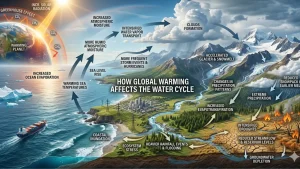
The Modern Water Cycle Diagram
Most classic science drawings fail to show how humans alter the planet. We now see a major human impact on the water cycle diagram.
Humans do not just watch water flow through the natural world today. We make large dams, cut forests and clean natural green areas. We also burn fossil fuel, which accumulates additional heat in the air.
Hot air increases the speed of some steps and slows down some. Our updated drawings should now include modern cities, factories and large farms. These clear changes prove that human choices directly affect the water cycle.
We must teach students about these real impacts in our science classes. Ignoring our role in the cycle makes the lesson plan highly incomplete. Every modern diagram must show how cities block rain from the ground. These concrete roads prevent water from seeping back into the deep soil.
Instead, rain water gets stored on the streets and flows into filthy urban drains. This change ruins the natural flow of fresh water to our rivers. Our maps must reflect these urban spaces to tell the true story.
1. Speeding up the Engine: Ocean Evaporation Feedback Loop
The oceans hold the largest portion of liquid water on our planet. As global heat rises, the top of the sea gets much warmer. This extra energy causes liquid sea water to turn to vapor faster.
This change now begins a cycle called the ocean evaporation reaction loop. Hot seawater sends huge amounts of gas at the atmosphere.
The excess gas traps solar heat, making the Earth even hotter. Due to this heat, the water level of the sea increases further, which worsens this cycle? There is now more water vapor in our sky than ever before.
Air acts like a giant sponge that swells with heat. This thirsty sponge sucks up moisture from oceans and lands very quickly. We can see this effect clearly in the tropical regions of Earth.
These warm ocean zones now face rapid drying and rising air trends. This loop is a major reason why global storms are getting stronger. We must show this heating loop with thick red arrows on maps. These red arrows point from the hot seas directly to the clouds. This visual change helps us understand how heat provides energy to the global cycle.
2. Thirsty Plants: Evapotranspiration and Climate Change
The global water cycle does not happen only over open ocean waters. Plants pull water from the soil and release vapor through their leaves. This combined movement of ground water is called transpiration by green plants.
To understand the risks we have to study evapotranspiration and climate change. The soil dries from excessive heat, which makes plants struggle for water.
In extreme heat, plants close their pores to keep their water inside. This action stops the natural release of moisture into the local air. Losing big forests to fires means less water goes up into clouds.
This drying of our forests makes local climates much hotter and drier. We see these dry forests burning in places like the American West. Without trees, the local water cycle breaks down and stops rain patterns.
Our new diagrams must show these shrinking green paths on dry land. We cannot ignore how plants help control the flow of global water. When trees die, the ground becomes hard and cannot hold fresh rain. This dry ground leads to dust storms and loss of good crops. Our charts must show these dying forests to teach the true balance.
3. The Intensification of the Hydrological Cycle
A warmer world makes the global water cycle run much faster now. This rapid shift is the intensification of the hydrological cycle today.
The entire system behaves like a pot of boiling water on a stove. Due to this rapid pace, extreme weather events have now become more common.
We’re seeing more severe floods and long lasting dry conditions around the world. The natural balance of our seasons is rapidly deteriorating. Let’s now take a look at the three major effects of this intense cycle:
- Wetter Wet Regions: The wet areas receive heavy rainfall leading to flash floods on local roads.
- Drier Dry Regions: Soil moisture in dry areas decreases rapidly, causing severe and long-lasting dry.
- Less Snow, More Rain: The ice melt quickly on the mountains, thereby deteriorating the time of water drift in spring.
All three of these changes show just how big a threat the fast cycle is to our food supply. Due to the uncertainty of the weather, farmers cannot tell the exact time of sowing crops. Our water systems have to adapt to these rapid changes in the cycle.
We must build better dams and reservoirs to catch this fast runoff. This faster cycle means water does not stay where we need it. We must change how we share water between our towns and farms.
4. Unpredictable Skies: How Does Climate Change Affect Precipitation Patterns?
We must ask how does climate change affect precipitation patterns globally. Warm air holds seven percent more moisture for each degree of warming. This huge buildup of water does not fall as gentle summer rain. Instead, the loaded clouds dump massive amounts of water all at once.
Flash floods occur in some areas, causing local roads to be washed away quickly. At the same time, long-term droughts occur in other places as the path of storms changes due to hot winds.
The days between storms increase as warm air takes longer to cool. When rain falls on hard, dry soil, the ground cannot absorb it. The water flows rapidly and carries with it sludge and waste materials into the rivers.
This rapid flow does not help in filling our deep underground wells. Cities should be prepared for these heavy rains by creating better drainage systems. We must design our neighborhoods to handle these sudden and massive storms.
Our roads and bridges are not built to survive these new weather shifts. We must use smart tools to track these changing storms across countries. Knowing where the heavy rain will fall helps save lives and homes. This tracking is vital as storm patterns become harder to predict safely.
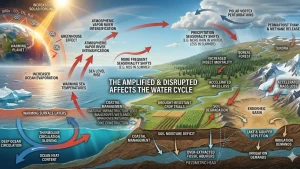
Reading the New Water Cycle Diagram
We must update our mental maps to match this new global reality.
- First, we must draw thicker arrows pointing up from the oceans.
- Second, we must show wider paths for floods and heavy land run-off.
- Third, we must draw smaller mountain snow piles on our science maps.
- Finally, we must show how city concrete blocks water from the soil.
These visual updates help students understand the real state of Earth. A simple loop does not teach the truth about our current climate. Our drawings must reflect the active role that humans play every day.
We can use these maps to plan better for a warmer world. These visual tools show where we must act to protect our water. We can share these updated maps with leaders who make public laws. Better maps help us see the connection between our actions and nature.
Steps to Balance the Cycle
We can take small steps to help fix our local water cycles.
- First, we can restore wetlands to hold flood waters and refill pools.
- Second, we can plant trees to keep natural moisture moving in air.
- Third, we can build green streets to let rain soak into ground.
- Finally, we must cut down on carbon waste to cool the oceans.
These actions will help restore some balance to our rapid global cycle. Every small effort counts when we protect our vital water resources today. We must work together to make our cities safer and more resilient.
Our future depends on how we manage the water we have now. We can teach our neighbors how to save water in their homes. Simple steps like catching rainwater in barrels make a big difference daily. These local deeds add up to protect our global water systems today.
Summary
Global warming has broken the simple water cycle loop from old books. Our greenhouse gas waste drives faster rising vapor and heavy, violent rain patterns.
Updating our diagrams helps us plan for a dry and volatile future. We must act now to protect our most precious global resource today.
A healthier cycle means a safer and more stable world for all. We must share this science with everyone to build a better tomorrow. Let us change our old ways before the cycle spins out of control.
Frequently Asked Questions
Q: What is the human impact on the water cycle diagram?
A: Human actions warm the planet, which alters natural evaporation and disrupts the classic water cycle paths.
Q: In what major ways does climate change affect precipitation patterns today?
A: Climate change warms the air, which leads to heavy storms in some areas and severe droughts in others.
Q: Can you explain the intensification of the hydrological cycle in simple terms?
A: It means rising temperatures speed up evaporation and cause more frequent, severe weather events across the globe.
Q: In what way are evapotranspiration and climate change linked on land?
A: Higher heat dries the soil and forces plants to close their pores, which stops them releasing moisture.
Q: Why is the ocean evaporation feedback loop dangerous for our global climate?
A: Warmer oceans release more water vapor, which traps extra solar heat and warms the planet even more.