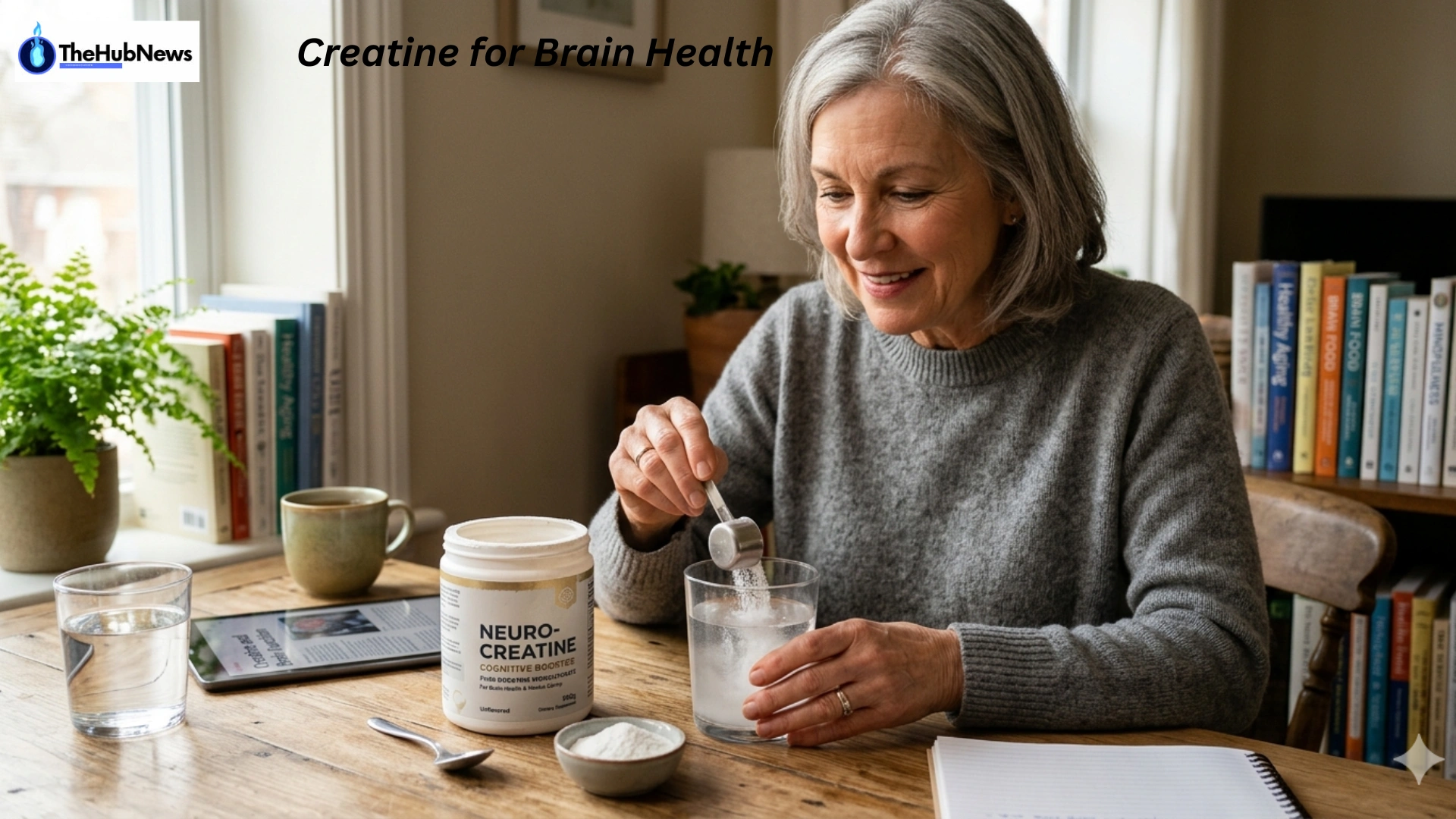
Most people know creatine as a muscle builder. Athletes use it to gain strength and power. However, new research shows it does much more for the human body. Your brain uses a large amount of energy every day. Creatine helps supply that energy when you need it most. This makes creatine for brain health a major topic in modern nutrition.

What is Creatine?
Creatine is a natural compound found in your cells. Your body makes it in the liver and kidneys. You also get it from eating meat and fish. About 95% of it stays in your muscles. The rest goes to your brain and other organs.
Your brain is an energy hog. It uses about 20% of your total daily calories. Creatine helps create a molecule called ATP. This is the main energy source for your cells. When energy levels drop, your brain feels tired. Creatine helps keep the mental lights on during long days. It ensures your neurons have a constant supply of fuel.
Understanding Creatine Cognitive Benefits
Many studies look at creatine cognitive benefits. Researchers find it helps most during times of intense stress. If you are tired or sleep-deprived, creatine helps you think clearly. It acts like a buffer for your mental systems.
Think of it as a backup battery. When you work on a hard task, your brain burns through fuel. Creatine refills that fuel quickly. People often report better focus and mental clarity. This is especially true for people who do not eat meat. Since they lack animal protein, their natural levels are often quite low. Supplementing helps bridge that gap. It allows your brain to function at its full potential.
How Creatine Powers Your Neurons
To understand why this helps, we must look at how cells use energy. Your brain cells need ATP to send signals. When you think hard, ATP breaks down into ADP. This process releases energy. However, the cell cannot use ADP for power.
Creatine carries a phosphate molecule. It quickly gives this phosphate to ADP to turn it back into ATP. This recycling happens in a split second. Without enough creatine, your brain might struggle to keep up with high demands. This is why you feel “wiped out” after a long exam or a hard day at work. Creatine speeds up the recharge process.
Creatine Monohydrate for Memory
Memory is a vital part of daily life. Using creatine monohydrate for memory is backed by solid science. It seems to help most with “working memory.” This is your ability to hold information in your head while you use it.
A study on older adults showed great results. Those taking the supplement scored higher on memory tests. It helps the brain process complex information faster. It also helps you recall facts more accurately under pressure. If you struggle with brain fog, this supplement might offer a solution. It provides the raw materials your brain needs to function. It helps you stay sharp during conversations and complex tasks.
The Neuroprotective Effects of Creatine
One of the most exciting areas of study involves the neuroprotective effects of creatine. This means it helps protect brain cells from various types of damage. It acts like a shield for your neurons.
It helps reduce oxidative stress in the brain. This stress can damage cells over time as we get older. Some doctors look at it as a way to support long-term health. It may help maintain brain volume and health as we age. Keeping your brain healthy now helps prevent problems later in life. It supports the physical structure of your brain cells. It may even help the brain recover faster from physical injuries.
Finding the Right Creatine Dosage for Brain Function
Finding the right creatine dosage for brain function is important. The brain needs a steady supply to see results. Most people start with a “loading phase.” This means taking 20 grams a day for five days. This quickly fills your body’s stores.
After that, you move to a maintenance dose. For muscle health, 5 grams is the standard amount. For the brain, some experts suggest 5 to 10 grams daily. Consistency is the real secret to success. You must take it every day to see a change in your thinking. It takes a few weeks for the levels in your brain to rise enough to matter. Do not skip days if you want the best results.
Why Quality and Purity Matter
Not all supplements are the same. Always look for high-quality monohydrate. This ensures that the product is pure and safe for your body. Avoid products with added sugar or caffeine. Simple, unflavored powder usually works best. It dissolves easily in water, tea, or juice. Check for third-party testing labels on the bottle. This confirms that the product contains what the label says.
How Creatine Supports Mental Energy
When you feel mentally tired, the level of ATP in your body is low. Creatine donates a phosphate group to rebuild ATP. This process happens in seconds. It allows your brain to stay active without crashing.
This is helpful for students and busy professionals. It helps during big exams or long work meetings. By keeping energy high, you avoid the mid-afternoon slump. It is a natural way to boost your output. Unlike caffeine, it does not lead to a jittery crash later. It provides steady, reliable support for your mental endurance.
Dietary Sources vs. Supplements
You can get creatine from steak and salmon. However, you would need to eat a lot of meat to get 5 grams. That is roughly two pounds of raw beef every day. For most people, a supplement is easier and cheaper. It is also a better choice for the environment. Vegan versions are made in labs and contain no animal products. This makes it an accessible choice for everyone, regardless of diet.
Creatine for Sleep Deprivation
We all have nights where we do not get enough sleep. Sleep loss lowers the amount of high-energy molecules in your brain. Research shows that creatine can help offset this loss. People who take it perform better on mental tasks even when they are tired.
It does not replace sleep. There is no substitute for a good night’s sleep. However, it can help you get through a difficult day. It keeps your reaction times sharp and your mood stable. This is a great tool for new parents or shift workers.
Aging and Cognitive Health
As we get older, our natural creatine levels may drop. This can lead to slower thinking or memory lapses. Studies show that older adults benefit greatly from supplementation. It helps maintain muscle mass and brain health at the same time.
Creatine supports the brain’s ability to handle complex tasks. It also helps with physical balance and coordination. By protecting your neurons, you may keep your mind sharp for longer. It is a simple step to take for healthy aging.
Summary of Key Brain Benefits
- Better Energy: Refills ATP for better mental stamina and endurance.
- Sharper Focus: Helps you stay on task even when you are tired.
- Stronger Memory: Improves how you store and find information.
- Cell Protection: Keeps brain cells healthy as you get older.
- Fast Recovery: Helps the brain recover from lack of sleep and stress.
- Mood Support: Provides the energy needed for emotional regulation.
Practical Tips for Getting Started
Start with a small dose if you have a sensitive stomach. Mix the powder with plenty of water. Stay hydrated throughout the day. Track how you feel over the first month. Most people notice a difference in their focus within three weeks. Take your dose at whatever time fits your schedule best. You can mix it into your morning coffee or a post-workout shake.
Safety and Long-Term Use
Safety is a common concern with any supplement. Creatine is one of the most researched substances in the world. Thousands of human studies show it is safe for long-term use. It does not cause kidney damage in healthy people.
It also does not increase obesity, although the amount of water in your muscles may be higher. This water weight is actually a sign the supplement is working. It shows your cells are well-hydrated and ready for work. Always talk to your doctor before starting any new supplement routine.
Final Thoughts
The link between creatine for brain health and daily performance is clear. It is no longer a useful tool only for bodybuilders. If you want to support your mind, consider adding it to your routine. It is a cheap, safe, and effective way to boost your brain. Your brain works hard for you every second. Give it the nourishment it needs to stay sharp and healthy for years to come. Investing in your brain health today will benefit you for the rest of your life.
Frequently Asked Questions
Q: Does creatine make you smarter?
A: It doesn’t increase your IQ. However, it helps your brain function at its best during difficult tasks. It improves focus and memory when you are tired or stressed.
Q: Is creatine safe for the brain?
A: Yes. Decades of research show it is safe for healthy people. It supports brain energy without the side effects of stimulants.
Q: Can I take creatine if I don’t exercise?
A: Yes. Many people use it purely for cognitive support. It provides mental energy regardless of your activity level.
Q: How long does it take to work for the brain?
A: You may notice better focus in a few days. However, full benefits for memory and protection take about three to four weeks of daily use.
Q: Does caffeine stop creatine from working?
A: There is no strong proof that caffeine ruins the benefits. You can safely take both as part of your daily routine.